

<Services used>
- Incident Lake
RightTouch, Inc. is a fast-rising startup that provides an AI platform to enterprises with the goal of transforming the contact center. With rapid growth came challenges: incident response resources were stretched thin, and increasingly complex systems made investigating root causes time-consuming. RightTouch decided to adopt Incident Lake, SIGQ's AI agent platform. By consolidating information across organizational boundaries and automating reporting, the company aims to reduce its reliance on specific individuals in incident response and build a structure that delivers more value with limited resources.
■ Challenges before adoption
- When incidents occurred, customer engineers spent a great deal of time gathering technical information while also reporting to customers
- Incident reporting quality depended on individual skill and circumstances, leading to inconsistent detail and wording
- Infrastructure and repositories belonging to the company and its group company were intermingled, complicating root-cause identification during incidents
■ Expected benefits
- Information consolidation and automated reporting with Incident Lake reduce the time spent deciphering scattered technical information and drafting reports, freeing the team to focus on higher-value work
- AI-driven standardization unifies reporting format and wording, enabling fast, high-quality incident reports that don't depend on any one person
- Incident Lake's cross-organizational knowledge base breaks down silos and structures complex system information, making root-cause investigation and rapid decision-making easier
Behind the rapid growth of AI customer support, the incident response burden surged
RightTouch, Inc. is a startup spun out of PLAID in December 2021. Centered on its web support platform "QANT Web," the company offers products that make full use of AI to transform contact centers, including "QANT VoC," which improves customer service based on the Voice of the Customer (VoC), and "QANT Speak," an AI voice operator.
The company's system infrastructure uses a multi-cloud configuration of GCP and AWS. Because RightTouch was spun out of PLAID, its infrastructure is broadly divided into two layers.
The first is the KARTE platform provided by PLAID. RightTouch uses KARTE for tracking end users' web behavior on its web support platform.
The second is an in-house platform built by RightTouch. It stores customer support data related to inquiries that web behavior cannot capture, such as VoC from phone support, the background of inquiries, and the details of interactions. A defining feature of the company's technology stack is that applications on the KARTE platform coexist with applications on its own infrastructure.
RightTouch is also pursuing advanced AI initiatives, such as embedding LLMs, centered on Gemini, into its products, using AI to analyze VoC and other data, and developing new products as AI-native.
As its business grew rapidly, the company faced two challenges: stretched incident response resources and silos caused by system complexity.
The first was stretched incident response resources. When an incident occurs, customer engineers take the lead, working with product and business teams to resolve the issue and communicate with customers. With only a limited number of customer engineers, handling unexpected incidents while supporting other products placed a heavy burden on the team. The most time-consuming part was deciphering technical information flying across various channels, picking out the relevant facts, and reporting them to customers in plain language. As resources were squeezed, the company fell into a vicious cycle in which proactive customer support and building out a delivery structure for growth were pushed aside.
The second was silos caused by system complexity. As noted above, the company's systems span multiple platforms, and its source code repositories and Slack channels are spread across multiple organizations. As a result, isolating the cause of an incident took effort, and in some cases resolution took a long time unless someone with experience at both PLAID and RightTouch was involved. Complexity in both systems and organization was hindering information sharing and making incident response dependent on specific individuals.
With these challenges in mind, Haruki Kawashita, a customer engineer at RightTouch, describes the kind of operations the team is aiming for:
"Customer engineers are rare people who bridge technology and business. To make the most of limited resources, we need to push operational automation forward so people can focus on the areas that truly need them, and concentrate on helping customers optimize our AI products and deliver value."
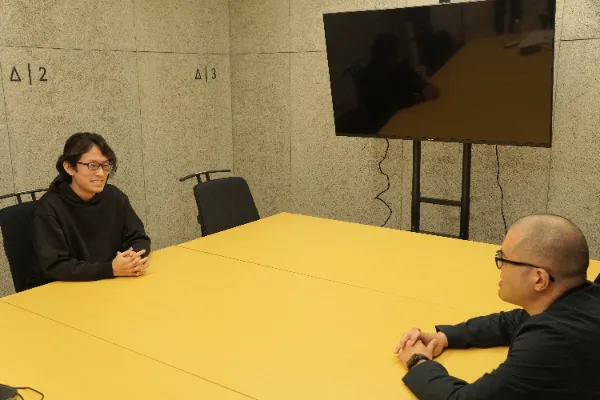
Consolidating scattered information and reporting in language customers understand
To address these challenges, RightTouch decided to adopt Incident Lake, SIGQ's AI agent platform.
Kawashita expects Incident Lake to deliver on four points:
- Consolidating technical information scattered across many locations and channels, and accurately picking out the facts
- Reporting based on those facts in language customers can understand
- Preventing situations where only certain people can identify the root cause
- Reliably producing postmortems afterward to prevent recurrence
"Right now, consolidating information and reporting to customers take up a lot of our time. From a reliability standpoint, how much we can shorten the time it takes to post on the status page and make initial contact with customers, and how well we can ensure accuracy, are extremely important," says Kawashita.
How does Incident Lake meet these expectations?
Incident Lake groups data sources from multiple organizations, applies access permissions, and automatically collects and shares only the information related to a specific incident. This enables both information consolidation that transcends organizational silos and permission management that ensures only the necessary information reaches the right people. As a result, even when Slack workspaces and GitHub repositories are split across organizations, Incident Lake can powerfully consolidate information and break down silos.
Another key feature is structuring and accumulating knowledge through a knowledge base. Without anyone having to write documentation by hand, AI captures tacit knowledge held by individuals and converts it into explicit knowledge. For example, knowledge can be saved directly via Claude Code MCP, and saved knowledge can be updated regularly with GitHub Actions. The ability to automate knowledge management without human intervention is a major advantage of Incident Lake.
RightTouch plans to transform its incident response step by step through Incident Lake. Kawashita says the team will first load the necessary knowledge and past incident information, then put Incident Lake to work in real incident response while continuing to fine-tune it. The team will also work on standardizing reporting quality with AI and speeding up initial decision-making.
"Our ideal is to use Incident Lake across the entire incident response operation, so that even new team members can handle incidents smoothly just by interacting with Incident Lake's AI, without having to consult documents in different places," says Kawashita.
Resisting the temptation to "build it ourselves"
Before adopting Incident Lake, RightTouch also considered solving the problem in-house. The company has a small team of AI engineers and was already optimizing its work with AI, for example by building a system that pulls source code from GitHub so anyone can ask questions casually in Slack.
Kawashita explains why the company chose not to build in-house:
"Even if we could build a tool in-house with AI-driven development, it wouldn't hold up in practice without continuous tuning. On top of that, building the features the operations team actually needs requires hands-on incident response experience. That could end up consuming a significant amount of our engineers' time," says Kawashita.
Kawashita recalls that the deciding factor was the judgment that adopting a product refined by a company with deep incident response expertise would be more cost-effective than spending time and people building a production-ready tool.
Unlimited scalability to support a small, elite team
Looking ahead, Kawashita says he wants the company's customer engineers to focus on high-level support that delivers the value of its AI products to customers. Specifically, his vision is for team members with a deep understanding of each customer's operations to tune the products optimally for each customer and help them get the most out of the AI products, contributing not only to business growth but also to product refinement. To that end, Kawashita says he wants to focus on hiring highly skilled people who understand both business and technology, even though such talent is rare.
Finally, Kawashita offers advice to companies facing similar challenges:
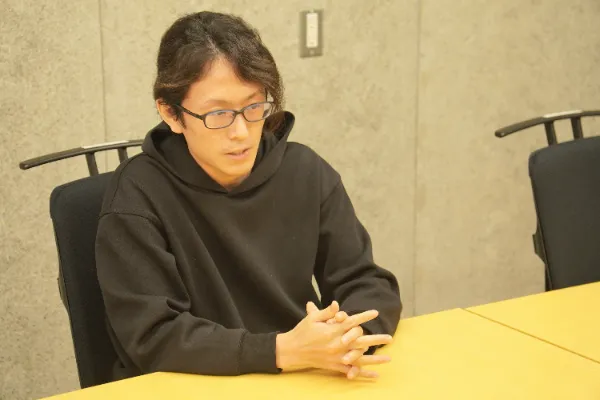
"Honestly, rather than going through trial and error with operations on your own, you're better off just using a SaaS product. Much of the incident response process is common to every company. It's more efficient to align your own practices with best practices that deliver reliable performance, and you can expect better results." (Kawashita)
Headcount growth and business growth don't always go hand in hand. Especially for startups whose businesses grow exponentially, SaaS that offers unlimited scalability is a powerful weapon against talent shortages. SIGQ will continue to support RightTouch's fast-growing products through Incident Lake.